Was digital couture week worth the fuss, straining already-tight fashion budgets?
Advert
Obsessions
Was digital couture calendar week worth the fuss, straining already-tight fashion budgets?
Paris couture calendar week went full digital for the first time this year, with major houses like Chanel and Dior releasing pre-recorded videos showcasing new collections. But given the situation, were they worth the effort, questions one mode observer.
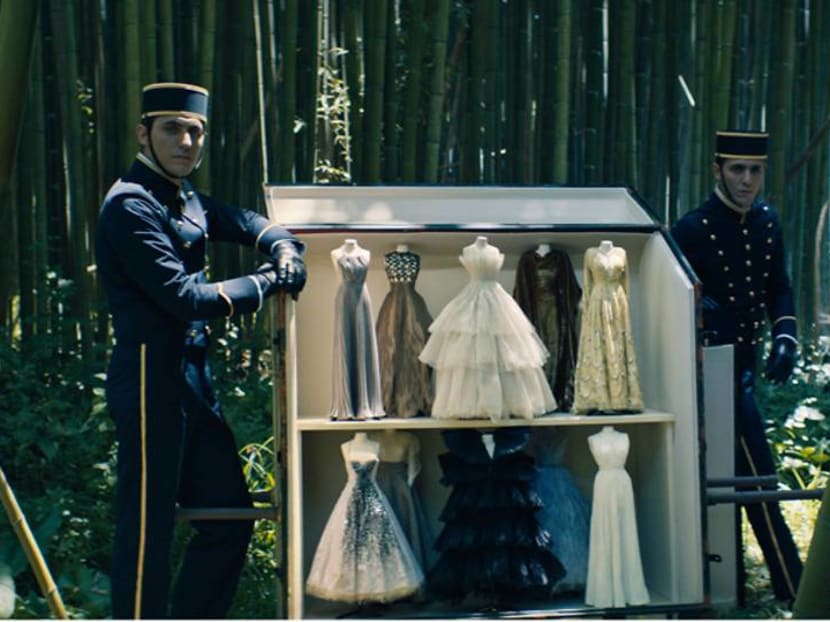
Dior'due south couture drove made its debut in a 15-minute online video. (Photo: Dior)
On the Friday before the first all-digital haute couture week, designer Maria Grazia Chiuri dialled into a Zoom conference phone call from Dior'south Paris headquarters and took questions from members of the British press.
It was a happy, if strange, reunion: Way weeks are a trade event, yes; just they are also fun, glamorous and exciting, a fourth dimension when a large cantankerous-department of the industry gets to dress up, exchange gossip, and marvel at clients' matching Birkins and fresh botox injections. Wonderful every bit it was to tune in to this week's shows from home in sweatpants, that fizz of excitement was missing.
Chiuri, for her part, was at ease, perched on a stool in a casual white T-shirt and trousers. On her left was a preview of her new couture collection, which would make its official debut via a 15-minute online video on Mon.
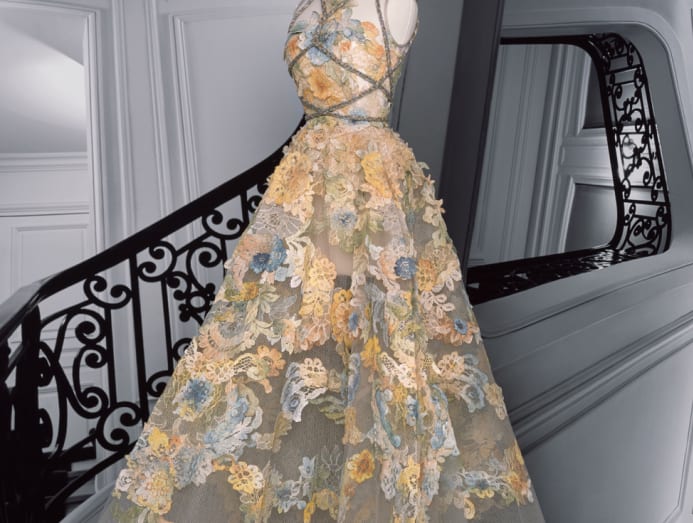
The clothes – fragile Fortuny dresses and ball gowns in champagne silk and lilac feathers, a molded woolen Bar jacket and skirt – were typical of Chiuri's oeuvre for Dior. What was not typical was their size: These were doll clothes, fitted to mannequins measuring only nigh two feet tall. They were a reference to the 1945 Theatre de la Way, a travelling fashion exhibition involving 60 French designers and more 200 dolls and so exquisitely dressed they were credited with reestablishing Paris every bit the earth'due south style capital later on the 2d world war.
State of war, pandemic – the parallels are obvious. Only beyond providing a thematic link, Dior's dolls were also presented as a practical solution: They can easily traverse borders at a time when clients tin can't. "We can travel with this around the world," said Chiuri, referring to a set up of iii painted trunks, beautifully modelled after the brand'southward Avenue Montaigne headquarters. They will before long make their way to Shanghai and New York, accompanied by fabric swatches and toiles so that clients tin be fitted for their one-of-a-kind, mitt-sewn garments without flying to Paris.
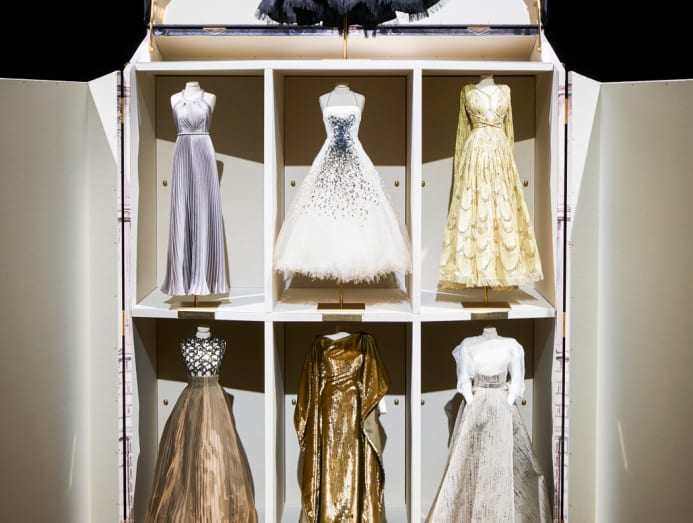
READ> Dior unveils couture collection on tiny mannequins, to be dispatched to VIPs
Welcome to fashion week's new normal: Where live shows accept been replaced past pre-recorded videos, and £50,000 (S$88,000) dresses are sold to customers via travelling dolls.
If that sounds a little outlandish, well, it is. Since the inflow of coronavirus, the £one.2 trillion fashion and luxury industries have had to grapple with a crisis of unprecedented global scale: Supply chains splintered, orders cancelled, stores boarded-upward, the evaporation of the feel-practiced gene that leads shoppers to splash out on luxury.
All the same style weeks have gone on – albeit sometimes postponed, and presented entirely online. Thirty-4 brands participated in the showtime London Digital Mode Week in June, despite a lack of actual new clothes to prove; the organisers of Paris couture calendar week were able to round upwardly enough designers to evangelize three days' worth of videos, delivered hourly. Some showed new, smaller collections; others released sketches, or hostage short-length documentaries extolling the value of mitt-embroidery.
Was digital couture calendar week worth the fuss, the strain on already-tightened budgets? The videos, for the most part, were wearisome or disruptive, resembling film trailers or perfume adverts, and lacking in narrative. The clothes themselves were hard to run across, obscured by studio lights, heavy splicing and poor video quality. Without the alive element, there was none of that exciting anticipation. There was as well no need to release the videos once per 60 minutes – in the future, fashion week organisers might have a cue from Netflix and release all that pre-recorded content on-demand.
Ultimately, the recordings did little to eternalize brand disinterestedness – the existent point of haute couture week.
Still, at that place were worthy attempts. Iv designers not often seen on camera – Guo Pei, the Chinese designer behind the improvident yellowish dress Rihanna wore to the Met Gala in 2015; Rahul Mishra, the only Indian designer on-schedule; quondam Sonia Rykiel artistic manager Julie de Libran; and British designer Tamara Ralph of Ralph & Russo – took a cue from designers at Shanghai Fashion Week and used the opportunity to speak directly to the public almost their process.
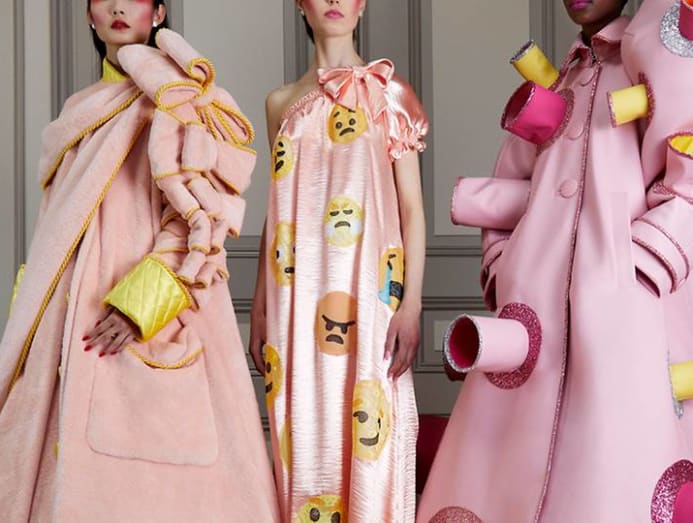
There tends to be a seriousness, a reverent hush around couture, which is why Dutch designers Viktor Horsting and Rolf Snoeren of Viktor & Rolf's bear witness was such a welcome change of pace. They injected sense of humour both into their designs, which featured emoticons and dressing gowns, and in their presentation – a simple but effective parody of the salon-fashion couture shows of the 1950s.
Large brands with big budgets certainly had the reward of the week. Dior released a fifteen-minute, feature-quality film on Mon afternoon that was magical to behold. Directed by the decorated Italian filmmaker Matteo Garrone and inspired by Ovid's Metamorphoses, the film followed a pair of liveried porters equally they carried a trunk of dolls, dressed in Dior couture, through an enchanted glade inhabited past nymphs, dryads and satyrs. Mesmerised by the dresses, nymphs crawled forrad to touch them; stone statues became mobile; a dryad untangled herself from her lover.
Merely however gorgeous the production, it ultimately did a disservice to the Dior make past featuring only white models. Every bit the scenes were inspired by the Italian painter Sandro Boticelli, to cast various models would have been "forced", Garrone said. There was as well an uncomfortable scene where a nymph looked to her satyr-partner for permission to guild a wearing apparel. For a brand that has positioned itself equally a champion of feminism, information technology was a bewildering misstep.
One make that could have gone all-out on a video – but didn't – was Chanel. Creative director Virginie Viard shot her new collection on a handful of punkish-looking models against a simple studio backdrop. Every bit a performance it underwhelmed, simply the clothes were fun and spirited, inspired by Karl Lagerfeld'southward salad days partying at the Le Palace nighttime guild in the Eighties. All ruffled taffeta and metal tweed, they seemed just the thing to dress upwardly in later on months of austerity.
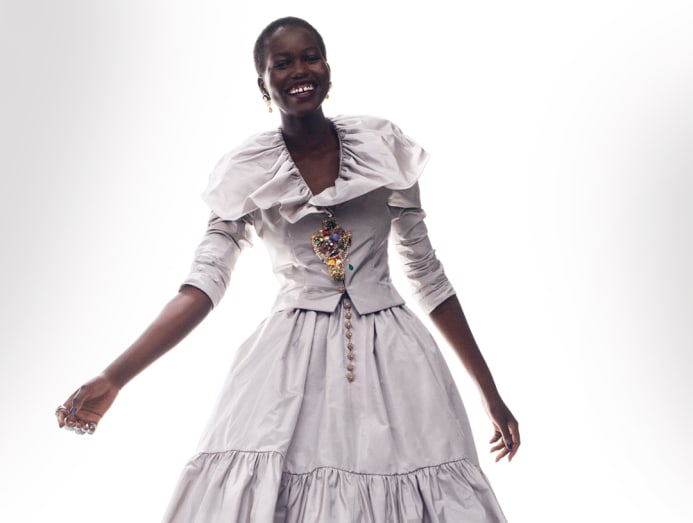
READ> Punk princess: Chanel's autumn couture drove is a nod to rebel socialites
Only the prove that deserved the most praise wasn't role of the haute couture schedule at all. On Sunday afternoon, designer Veronique Nichanian and director Cyril Teste debuted Hermes's new men's collection: A meticulously choreographed operation that gave viewers a glimpse of what style shows typically look like backstage. The pic was shot and streamed alive, lending a dramatic tension that was missing elsewhere. With its long shots and careful lighting, it also showed the dress to great reward.
Information technology was perhaps the first fashion show as interesting to watch online as in person, setting a bar for other brands to measure against.
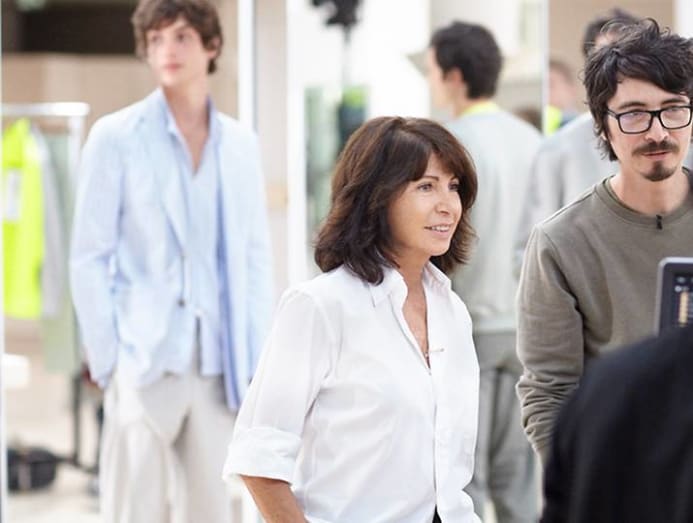
READ> No track, no fuss: Hermes unveils 2022 menswear with alive performance art
Balmain, too, showed live and off-schedule, streaming on TikTok a performance from French singer Yseult and a gaggle of models dancing on a boat floating down the Seine. While plagued by somewhat unglamorous connectivity issues, designer Olivier Rousteing's willingness to adventure a alive performance to connect with his many social media fans was applaudable.
1 hopes to meet more of information technology. While brands are eager to return to regular manner weeks in September, the pandemic has presented a rare opportunity to finally scissure digital video.
It'south about time. Fashion shows are no longer private events but public-facing ones; digital, not live, audiences should be the priority.
It is a claiming with inherent risks; few are the brands willing to take chances their make disinterestedness on a marketing experiment. But as Hermes showed, when it's done right, the results can exist fantastic.
By Lauren Indvik © 2022 The Financial Times

Recent Searches
Trending Topics
hendersonherry1988.blogspot.com
Source: https://cnalifestyle.channelnewsasia.com/obsessions/digital-couture-week-paris-247766
0 Response to "Was digital couture week worth the fuss, straining already-tight fashion budgets?"
ارسال یک نظر